
From corporate IT to award-worthy cheese, Stephen Fleming’s career has taken a fairly delicious turn.
After moving to Leeds and discovering just how much brilliant Yorkshire cheese was being made locally, Stephen spotted something missing: a proper independent cheesemonger where curious food lovers could discover it for themselves. George & Joseph began at farmers’ markets in 2012 before putting down roots in Chapel Allerton, where it has since become part of the neighbourhood’s thriving independent food scene.
Stephen is the sort of expert who knows exactly what makes a great cheese, but has absolutely no interest in making you feel like you need a qualification to enjoy it. His tastings are relaxed, generous and full of those brilliant little surprises that make you rethink what you thought you liked. Blue cheese sceptic? Goat’s cheese avoider? Consider yourself warned.
We caught up with Stephen to talk cheese, unexpected career changes, slightly bonkers pairings and why the best tastings always leave room for conversation.
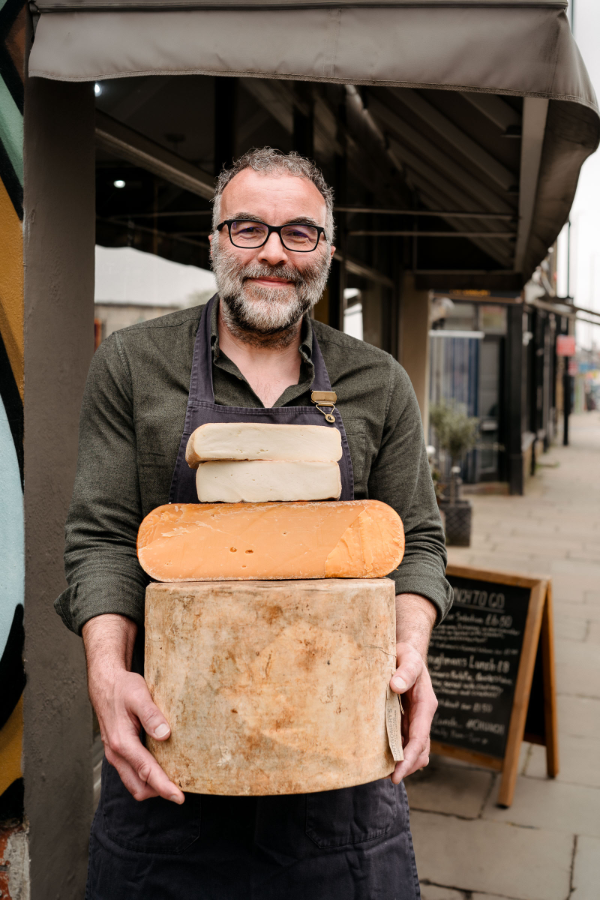
Your story and the business
Can you take us back to the moment George & Joseph began? What made you believe that an independent cheesemonger could work in Chapel Allerton?
I’d moved to Leeds in 2000 and developed a real interest in Yorkshire cheese and locally produced food. I started going to a Leeds cheese club called Fromage to Fromage and found myself fascinated by the variety of cheeses being made, but also frustrated that there was nowhere in Leeds dedicated to selling them.
The business began in 2012, initially at farmers’ markets and food fairs. That gave me a chance to test the idea before committing to a shop. Chapel Allerton felt like the natural home because it already had a strong independent food scene and a community that cared about where its food came from.
We opened our first shop in 2013, just off the main high street, before moving to our current shop on Harrogate Road in 2017.
What did you do before becoming a cheesemonger, and which skills from that earlier chapter have proved unexpectedly useful?
I spent 20 years working in corporate IT, which is about as far removed from cheesemongering as you might imagine.
Surprisingly, a lot of the skills carried across. IT teaches you to solve problems, manage projects, understand systems and stay reasonably calm when something suddenly stops working. All of that is useful when you run a small business.
The biggest change was moving from a career where things could sometimes feel quite abstract to one where you can see immediately whether somebody loves what you’ve given them.
Independent food retail can look wonderfully romantic from the customer side, but what has been the biggest reality check behind the scenes?
Probably how little of your time is actually spent standing behind a beautiful counter talking about cheese.
There’s staffing, cash flow, deliveries, refrigeration, cleaning, compliance, marketing and an endless procession of things that need repairing. Cheese is also a perishable product, so every buying decision matters. You can have the most wonderful cheese in the world, but it still needs to be sold at the right time and at the right margin.
The romance is real, but it sits on top of a lot of hard work.
How do you decide which cheeses earn a place on the counter?
Flavour is non-negotiable, but being delicious isn’t always enough. Every cheese needs to earn its place.
We look at whether it brings something different to the range, whether the quality is consistent and whether it represents good value. The maker’s story matters, particularly when we can build a genuine relationship with them, but the cheese still has to stand up for itself.
Customer demand is important too, although our role isn’t simply to stock everything people ask for. It’s to do some of the thinking for them and present a carefully chosen range in which every cheese has a purpose.
What has running George & Joseph taught you about yourself?
It’s taught me that I’m far more resilient than I thought I was.
Running a business means making decisions without ever having all the information you’d ideally like. I’ve learnt that you can’t wait until you feel completely ready, because you probably never will. You have to make the best decision you can, act on it and adjust as you go.
It has also taught me that I get most satisfaction from helping other people grow – whether that’s a member of our team, a small cheesemaker or a customer discovering something new.
A passion for cheese
What makes cheese endlessly interesting to you, even after working with it every day?
Cheese is never really a finished or completely standardised product. It changes with the seasons, the milk, the animals’ diet, the weather and the way it has been matured.
Two batches of the same cheese can taste noticeably different. There’s also an extraordinary amount of geography, history, science and human skill contained in something that, on the face of it, is just milk, salt, cultures and time.
However much you know, there’s always another cheese, maker or flavour to discover.
What do you notice when tasting a cheese that most of us would probably miss?
I’m looking for balance rather than simply how strong the cheese is.
I’ll notice how the texture changes as it warms in the mouth, how the acidity, salt, sweetness and savoury flavours work together, and whether the finish develops or disappears quickly. I’ll also look at how the cheese changes from the centre towards the rind, which can tell you a great deal about its ripeness and condition.
But tasting isn’t about proving how many flavours you can name. The most important question is still: do I want another piece?
Creating memorable experiences
What first made you realise customers wanted to do more than buy cheese?
The counter told us.
Customers didn’t just want to know what a cheese was called. They wanted to know who made it, why it tasted the way it did, what they should drink with it and how it compared with something they already knew.
People would stay and talk, try samples and become genuinely excited by what they were discovering. Tastings were a natural extension of those conversations and allowed us to give people more time and take them a little further.
How do you make cheese tasting feel relaxed and accessible?
I start with eating the cheese, not with a long lecture about it.
There’s enough information to help people understand what they’re tasting, but I avoid jargon wherever possible. I also make it clear that there isn’t a correct answer. If somebody tastes hazelnuts and somebody else tastes roast chicken, both can be right.
The aim is to give people a bit of structure and confidence without making them feel that cheese is something they need a qualification to enjoy.
What separates an enjoyable tasting from one guests are still talking about several weeks later?
There needs to be at least one moment of surprise.
That might be a cheese they were convinced they wouldn’t like, a pairing they wouldn’t have thought of or a story about the maker that completely changes how they experience it.
A memorable tasting also needs space for conversation. People haven’t come to sit silently while I talk at them. The best events have the right balance of information, good cheese, unexpected discoveries and guests talking to each other.
Have you ever served a pairing that sounded slightly bonkers but completely won the room over?
We once ran an event with a local coffee shop and paired Reypenaer VSOP Gouda with espresso.
It sounds slightly odd, but the deep caramel and butterscotch flavours in the aged Gouda worked brilliantly with the roasted flavours of the coffee. It was one of those pairings where people looked doubtful beforehand and then immediately understood it once they tasted the two together.
Is there a particular guest reaction that captures why you enjoy running experiences?
It happens surprisingly often that somebody begins an evening by telling me they absolutely don’t like blue cheese or goat’s cheese.
They’ll reluctantly try a very small piece and, by the end of the evening, they’re asking me to remind them what it was called and where they can buy it.
I’m not trying to persuade people that their tastes are wrong. I enjoy giving them the chance to discover that their tastes might be broader than they thought.
Advice for other experience providers
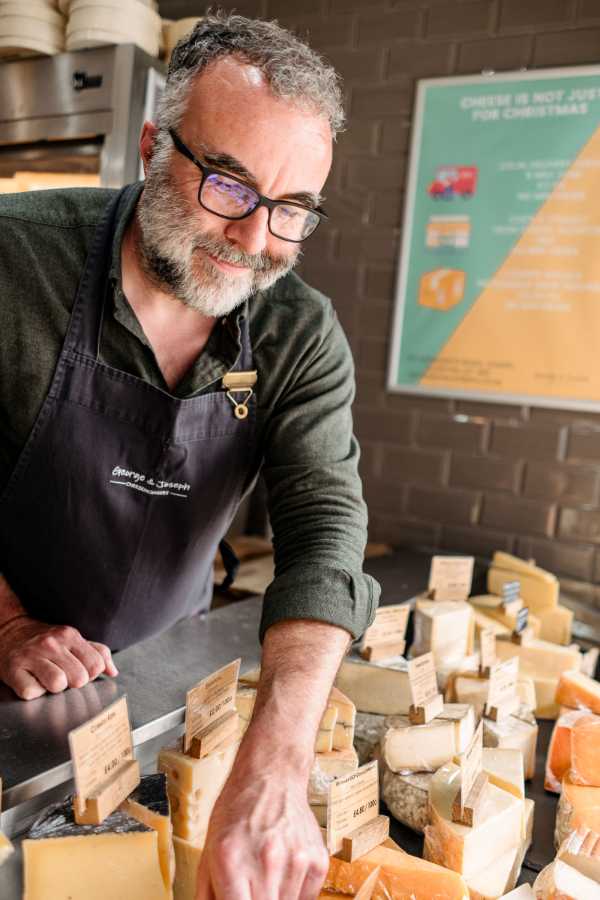
What would you say to a business owner who feels nervous about standing in front of a group?
Start with a small group and remember that you don’t need to become a performer.
People have come because they’re interested in something you understand and care about. Your job is to guide a conversation, not deliver a flawless stage show.
You also don’t need to know the answer to every possible question. Being able to say, “I don’t know, but I’ll find out,” makes you more credible, not less.
What did you underestimate when you began running tastings?
The amount of work surrounding the actual event.
A 90-minute tasting can involve several hours of choosing, ordering, cutting and tempering cheese, preparing accompaniments, setting up the room and clearing everything away afterwards.
I also underestimated how much timings can vary. Some groups need encouragement to start talking; others would happily discuss the first cheese for half an hour. You need a structure, but you also need to be able to read the room.
What is one part of an experience that providers sometimes overlook but guests always notice?
How they’re made to feel during the first ten minutes.
People notice whether they’re welcomed, shown where to sit, offered a drink and made to feel that everything is under control. They might not remember every technical detail you share, but they’ll remember whether they felt comfortable and looked after.
The experience starts before you introduce the first cheese.
How do you price an experience so it feels generous but remains worthwhile?
You have to price the whole experience, not just the raw cost of the cheese.
That includes the food and drink, staff time, preparation, administration, venue costs, clearing up, wastage and the expertise you’ve built over many years.
Generosity is important, but generosity doesn’t mean undervaluing what you do. Guests should leave feeling that they’ve had plenty to eat, learnt something and enjoyed themselves. The business should also be properly rewarded for delivering it.
Local roots and looking ahead
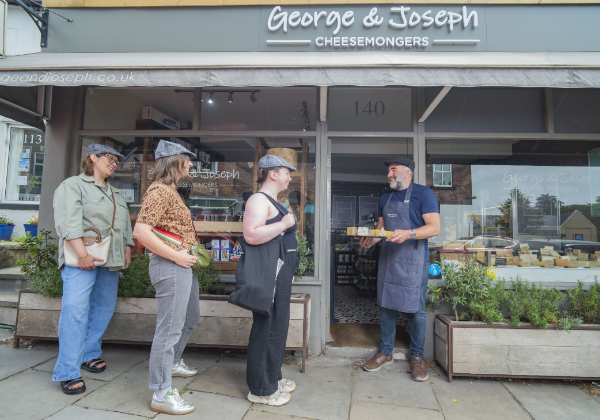
How has Chapel Allerton shaped George & Joseph?
Chapel Allerton has a particularly strong independent spirit. People here genuinely support local businesses and talk about them to their friends, which has been enormously important to us.
The area is also full of people who are curious about food and willing to try something new. Our customers have helped shape the range, the tastings and the wider business.
George & Joseph would certainly feel different somewhere else. It has grown with Chapel Allerton rather than simply being a shop that happens to be located here.
How do you want people to feel when they leave the shop or finish one of your experiences?
Looked after, more confident and slightly excited about what they’ve discovered.
I don’t want anyone to feel that choosing good cheese requires specialist knowledge. Our job is to give people the confidence of a cheesemonger without expecting them to become one.
Ideally, they leave with something they love, something useful they can remember and a desire to come back and discover what’s next.
Just for fun
Desert-island cheese?
Mrs Kirkham’s Lancashire. It’s the cheese I never tire of.
Best drink pairing that isn’t wine?
Reypenaer VSOP Gouda with espresso.
Cheese you most enjoy converting sceptics to?
A really good goat’s cheese such as Dorstone. Many people who think they dislike goat’s cheese have simply never tasted one in perfect condition.
Most controversial cheese opinion?
A cheeseboard doesn’t need to contain one cheese from every category. Three exceptional cheeses are much better than six average ones.
Your perfect cheeseboard in three cheeses?
Dorstone, Baron Bigod and Mrs Kirkham’s Lancashire.
Which cheese best represents your personality, and why?
Probably Mrs Kirkham’s Lancashire: dependable, straightforward and perhaps slightly crumbly around the edges.
Enjoy a range of Cheese Tasting Experiences at George and Joseph.